

The needles are in. You’re lying comfortably, with a little time to yourself. From the outside, it might look like very little is happening.
But what is happening in your brain?
This is one part of acupuncture research I find especially interesting. Researchers have used electroencephalography, or EEG, to record brain activity during treatment, including the quiet period when the needles remain in place. These studies offer a closer look at the nervous system’s response, although there is still plenty to understand.
A closer look at brainwaves
An EEG uses small sensors placed on the scalp to record electrical activity associated with the brain. It follows changes very quickly, making it useful for studying what happens before, during, and after acupuncture.
Unlike an MRI, it doesn’t take a detailed picture of the brain’s structure. Instead, researchers examine patterns of electrical activity, often called brainwaves.
You may have heard of alpha and theta waves. These rhythms are involved in several processes, including attention, sensory processing, and changes in alertness. They are sometimes described online as “relaxation waves,” but that description is too simple. Their meaning depends on where they are recorded and what the person is doing.[1][2]
What happens while the needles stay in?
In a small study published in 2017, researchers analyzed EEG recordings from nine healthy adults receiving acupuncture at Shenmen, or HT7, near the wrist. After stimulating the needles to produce the characteristic acupuncture sensation known as deqi, they left them in place for 15 minutes.
During needle retention, the researchers found increased synchronization in certain alpha and theta signals recorded across the scalp. In everyday language, some of the recorded rhythms became more closely coordinated.[1]
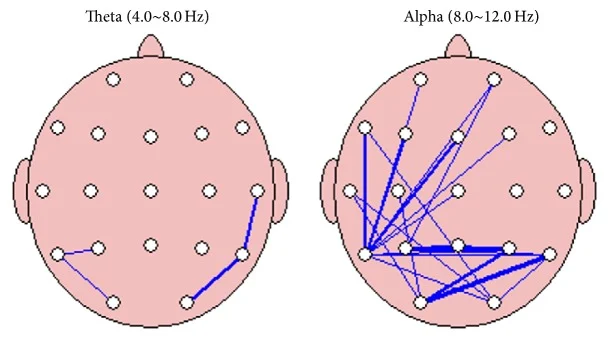
Figure 4, Lee et al. (2017). © 2017 Go-Eun Lee et al. Reproduced unchanged under the article’s Creative Commons Attribution license. View the original study.
That is an interesting observation. But it doesn’t mean the brain was “healing” or that more synchronization is automatically better. This was a very small study without a sham comparison, so it couldn’t separate the effects of needling from resting, attention, or other parts of the experience.
A newer study, published in September 2026, looked specifically at needle retention and the period after removal. Twenty healthy young adults received both penetrating acupuncture and a nonpenetrating sham procedure at Hegu, or LI4, on the hand, in separate sessions.
Both procedures produced changes in brainwave activity, including increased theta activity over the central scalp during retention. Many responses were similar, although some differences appeared between the procedures.[2]
To me, that makes the research more interesting. Touch, attention, expectation, and the physical stimulation of a needle can all be relevant to how the brain responds. Researchers are still working out their individual contributions.
Does a brainwave change mean the treatment works?
This distinction matters: measuring a brain response and measuring a health benefit are different tasks.
An EEG change alone cannot tell us whether someone’s pain improved, whether they will sleep better that night, or whether their brain has undergone lasting changes. Those questions require studies that measure symptoms and everyday function over time.
For chronic pain, there is a larger body of clinical evidence. A 2018 analysis combined data from 39 randomized trials involving 20,827 patients. Acupuncture performed better, on average, than both sham acupuncture and no-acupuncture controls for the chronic pain conditions studied. The additional benefit over sham was smaller. That supports acupuncture as an option for certain pain conditions, without proving that a particular EEG pattern explains the benefit.[3]
As an acupuncturist, I value being able to explain both what we know and what we are still learning. Research suggests that acupuncture can influence nervous system activity, but its mechanisms are not fully understood.[4]
The quiet time with the needles in is giving researchers a useful window into that response. For the person on the treatment table, what matters most is how care translates into feeling and functioning better.
References
- Lee GE, Yun JM, Yang SB, et al. (2017). Deqi Induction by HT7 Acupuncture Alters Theta and Alpha Band Coherence in Human Healthy Subjects. Evidence-Based Complementary and Alternative Medicine, 2017, 7107136.
- Wu Q, Lin D, Wang S, et al. (2026). Phase-dependent oscillatory dynamics during needle retention and withdrawal: a comparison of penetrating and non-penetrating acupuncture. Frontiers in Pain Research, 7, 1842608.
- Vickers AJ, Vertosick EA, Lewith G, et al. (2018). Acupuncture for Chronic Pain: Update of an Individual Patient Data Meta-Analysis. The Journal of Pain, 19(5), 455–474.
- National Center for Complementary and Integrative Health. Acupuncture: Effectiveness and Safety. National Institutes of Health. Accessed October 16, 2026.